

Documents needed
All it takes is what’s already in your wallet
- Valid domestic driver’s license
- Passport-style photo
- Valid government-issued ID
- Completed online application



Your license instantly translated and valid in 189+ countries. Travel freely to multiple destinations with a single permit — use in unlimited countries during validity period.
Recognized for 1 year here. Your IDP stays valid for its full term in 189+ other destinations.
An International Driving Permit is not officially recognized in this country.
Start your application
Takes less than 2 minutes to complete
Recognized for 1 year here. Your IDP stays valid for its full term in 189+ other destinations.
An International Driving Permit is not officially recognized in this country. Please check local driving regulations.

Limited Coverage
Digital Only | 1-Year Validity
$49
Recommended
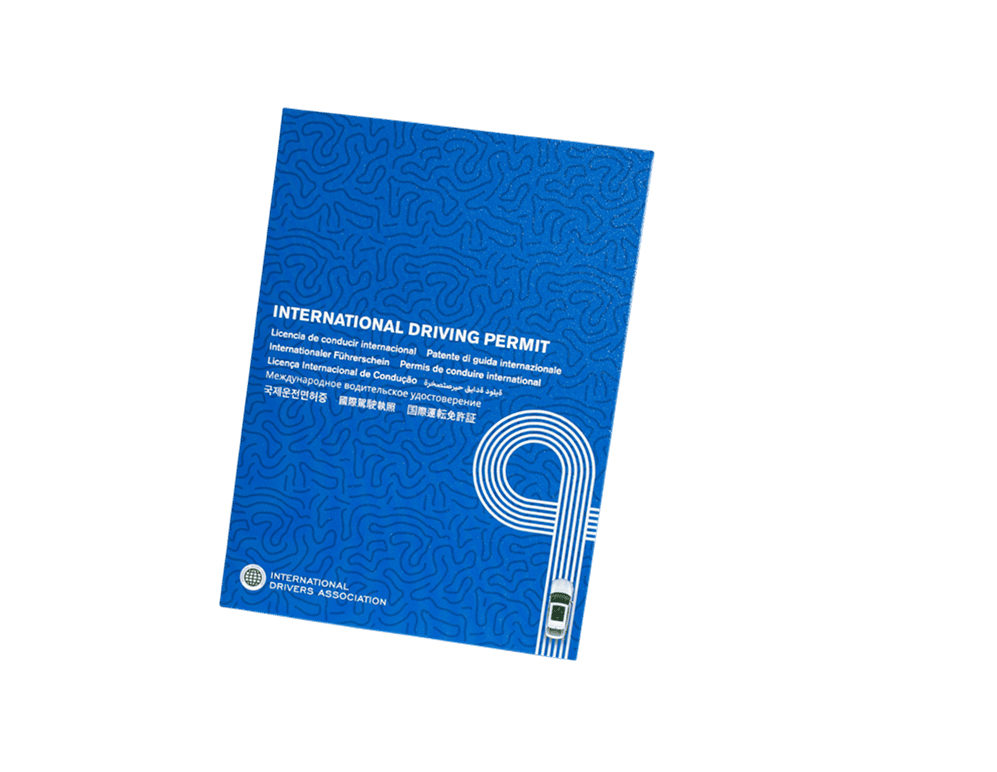
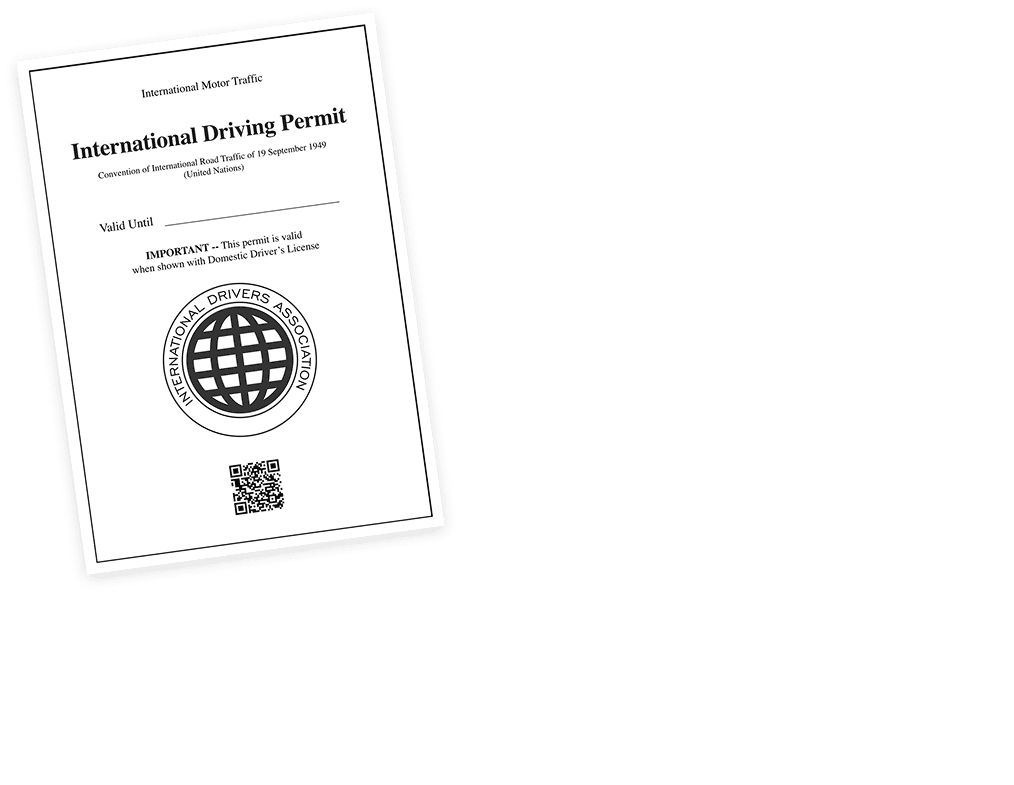
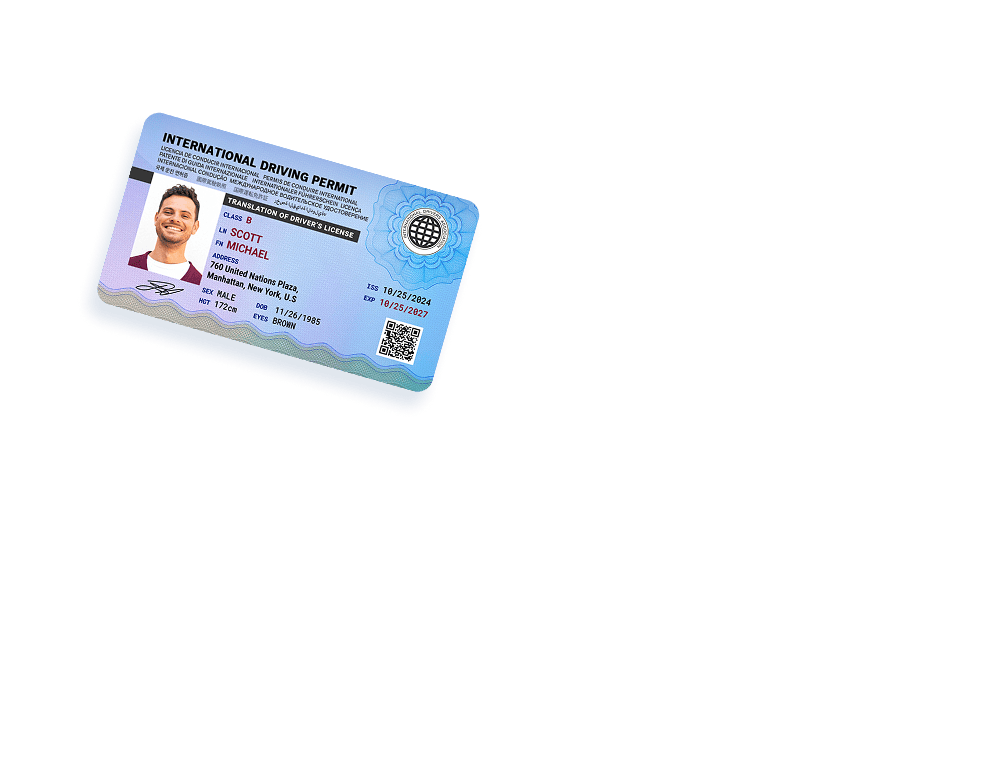
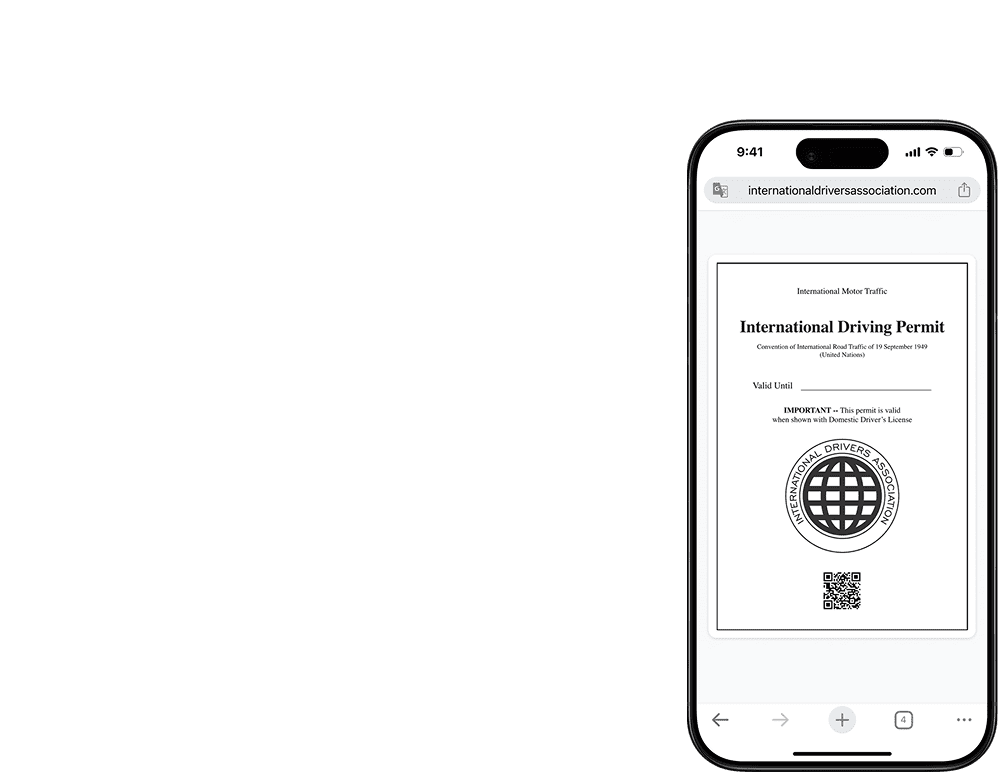
Global Coverage
Print + Digital | 3-Year Validity
$79
$149







Iran allows foreign nationals to drive for up to one year from entry with a recognized International Driving Permit alongside their valid domestic license. Issuing authority recognition matters here, confirm yours is accepted before driving.
| Driver type | Requirement | Notes |
|---|---|---|
| Tourist / short-term visitor | Required in most cases | Carry original license at all times |
| Rental car driver | Commonly required | Verify issuing authority with your rental company |
| Long-term foreign resident | Different rules apply | After 1 year, a local license may be needed |
| Mutually recognized license holder | May be exempt | Depends on home country agreement |
Make sure you meet the eligibility requirements and have the following documents ready before you start.
All it takes is what’s already in your wallet
You must meet every condition below
Iran is a land with rich history and culture that many tourist destinations are part of the UNESCO World Heritage. These stops demonstrate the country's religion, rituals, and traditions where many visitors can learn all about it. But if you aren't that interested in the country's history, there are plenty of restaurants where they offer delicious local foods for you to try and munch on. Also, remember that all driving directions have tolls, so it would be best to have some pocket money when driving at each destination.
Persepolis is located at the foot of Kuh-e Rahmat (Mountain of Mercy), which Darius I found in 518 B.C. It was once the Achaemenid Empire's capital and is known as the Gem of Achaemenid since it sets in urban planning, architecture, construction technology, and art. Now, it is part of the World's Greatest Archaeological Sites, and it's incomparable to other archaeological sites, not to mention that it has a unique civilization.
When visiting Persepolis, you can see their ancestors' outstanding carvings or the Pasargadae and Naqsh-E-Rustam, a stone tomb for the past kings. Although, this destination isn't for everyone since it is a historical site in the middle of the desert where historians or tourists that love history could only appreciate it. If you plan on visiting Persepolis, it is recommended to go during the springtime since it has the best temperature, not too hot and not too cold.
The Valley of the Stars is located near the Berkeh Khalaf Village, and it is the most visited Geosites in the world. Some locals call it "Estalah-kaftah," which in English translates to "The Fallen Star" because they believe that the area was formed by meteor rain, while others call it the Ghost Valley. The reason why some locals call it the Ghost Valley is because of the weird sounds in the wind and the constant whisper that can be heard between the rocks.
When you visit the Valley of the Stars, you can let your imagination go wild and explore every rock formation and leave some kind of proof that you have indeed seen one of the unique Geosites worldwide.
Anzali Lagoon or Talab-e Anzali is on the coast of the Caspian Sea, near Anzali port. It has many islands and is registered as an international wetland; it is also home to hundreds of animals and plants. In Anzali Lagoon, you will get to see the rare plant Caspian Lotus while slowly boat riding in its calm waters, hear birds chirping, and watch flowers dance with the water movements.
If you don't like boat rides, there are also restaurants in the area where you can taste some local delicacies like Kabab-e Torsh, Mirza Ghasemi, and Baghala Ghatogh. Trying some local food in the area is sure to make your trip enjoyable without going on a boat ride.
This destination is located in the southwest of Foman, Gilan Province. Rudkhan is a medieval castle that was once under the military as a fortress, and it's made up of brick and stone. The castle is known as "Castle of Thousand Steps" but named "The Biggest Brick Fortress." Locals call it the Castle of Thousand Steps because you would need to take about 935 steps if you want to get to the top.
Katlah Khor or Katale Khor Cave is located in Zanjan just by the Saqizloo mountains. You will see its entrance above a dry river and go down 700 meters deep to get to the first floor of the cave. Katale Khor means "Mount of Sun" since Katale indicates a low altitude mountain and Khor is an Avestan root that means Sun.
Before planning your trip to Kaltah Khor Cave, you must remember that Spring and Summer are the best times to go to the destination since the cave won't be filled with water during these seasons.
Located in the Khuzestan province, Chogha Zanbil was once a religious center of the holy city of the Kingdom of Elam, and it is part of the UNESCO World Heritage. It is an enormous ziggurat outside of Mesopotamia, and it was the best-preserved stepped pyramidal monument of its type. People who are fans of history and culture are highly recommended to visit here if you ever go to Iran since it is one of the best sites to learn about the country's history on the Median Empire.
When planning a trip to visit Chogha Zanbil, the best weather to go there would be early November to mid-March, where the weather is colder than usual. Chogha Zanbil is in a desert, so if you like to visit this tourist spot during the summer season, take note that it will be a very hot visit.
Babak Castle, Babak Khoramdin Castle, or Babak Fortress, is in the north of Aharcity by the western ridges of the great river Gharasu or more known as Kalibr. You will see it at the top of a mountain summit, about 2,300 to 2,700 meters above sea level. To reach the castle's main gate, you would need to climb a very narrow mountain path.
Take extra caution when climbing since the trail can barely fit two people in it, but when you get to the top, you will be greeted with such beautiful landscapes and history since the castle was built to protect Babak Khoramdin during the uprising of the Abbasid Caliphate System in the 3rd Century A.H.
Driving in the Islamic Republic of Iran is easy and delightful once you familiarize yourself with the Iran driving rules. Even if you're not highly skilled in driving, adhering to these rules allows you to comfortably navigate alongside other drivers in the country.
The Iran driving rules consist of several traffic regulations that ensure road safety. A thorough understanding of these rules is a must for all road users. Not only will this knowledge help you keep up with the local driving practices, but it will also help you avoid any unnecessary road traffic problems along the way. Hence, knowledge and respect for Iran driving rules are key to a pleasant driving experience in this beautiful country.
Like any other Islamic country, liquors in Iran are prohibited, so expect that drinking and driving have a severe punishment in their country. If they suspect you of drinking, you would need to comply with a breath test, and if you failed to comply with their test, you could receive punishment under Iran's Islamic Penal code, which is 80 lashes or a lighter penalty is a ticket. Either way, you should never bring any alcoholic beverages or liquor chocolates inside the country if you want to have a peaceful vacation.
In Iran, there are three kinds of road traffic speed limits, one of each type of road. Inside the city, there is a maximum of 50 km/h speed; outside the town is around 70 to 110 km/h, depending on the posted sign, and; on highways, it is 70 to 120 km/h, also depending on the posted sign.
Knowing these speed limits can make your travels safer and trouble-free since there are plenty of speed cameras around the country's roads. So if you ever get pulled by the authorities, it is most likely because you are overspeeding. Avoid going to the police office during your trip by complying with the road traffic rules of the Islamic Republic of Iran.
Iran is a land with rich history and culture that many tourist destinations are part of the UNESCO World Heritage. These stops demonstrate the country's religion, rituals, and traditions where many visitors can learn all about it. But if you aren't that interested in the country's history, there are plenty of restaurants where they offer delicious local foods for you to try and munch on. Also, remember that all driving directions have tolls, so it would be best to have some pocket money when driving at each destination.
Persepolis is located at the foot of Kuh-e Rahmat (Mountain of Mercy), which Darius I found in 518 B.C. It was once the Achaemenid Empire's capital and is known as the Gem of Achaemenid since it sets in urban planning, architecture, construction technology, and art. Now, it is part of the World's Greatest Archaeological Sites, and it's incomparable to other archaeological sites, not to mention that it has a unique civilization.
When visiting Persepolis, you can see their ancestors' outstanding carvings or the Pasargadae and Naqsh-E-Rustam, a stone tomb for the past kings. Although, this destination isn't for everyone since it is a historical site in the middle of the desert where historians or tourists that love history could only appreciate it. If you plan on visiting Persepolis, it is recommended to go during the springtime since it has the best temperature, not too hot and not too cold.
The Valley of the Stars is located near the Berkeh Khalaf Village, and it is the most visited Geosites in the world. Some locals call it "Estalah-kaftah," which in English translates to "The Fallen Star" because they believe that the area was formed by meteor rain, while others call it the Ghost Valley. The reason why some locals call it the Ghost Valley is because of the weird sounds in the wind and the constant whisper that can be heard between the rocks.
When you visit the Valley of the Stars, you can let your imagination go wild and explore every rock formation and leave some kind of proof that you have indeed seen one of the unique Geosites worldwide.
Anzali Lagoon or Talab-e Anzali is on the coast of the Caspian Sea, near Anzali port. It has many islands and is registered as an international wetland; it is also home to hundreds of animals and plants. In Anzali Lagoon, you will get to see the rare plant Caspian Lotus while slowly boat riding in its calm waters, hear birds chirping, and watch flowers dance with the water movements.
If you don't like boat rides, there are also restaurants in the area where you can taste some local delicacies like Kabab-e Torsh, Mirza Ghasemi, and Baghala Ghatogh. Trying some local food in the area is sure to make your trip enjoyable without going on a boat ride.
This destination is located in the southwest of Foman, Gilan Province. Rudkhan is a medieval castle that was once under the military as a fortress, and it's made up of brick and stone. The castle is known as "Castle of Thousand Steps" but named "The Biggest Brick Fortress." Locals call it the Castle of Thousand Steps because you would need to take about 935 steps if you want to get to the top.
Katlah Khor or Katale Khor Cave is located in Zanjan just by the Saqizloo mountains. You will see its entrance above a dry river and go down 700 meters deep to get to the first floor of the cave. Katale Khor means "Mount of Sun" since Katale indicates a low altitude mountain and Khor is an Avestan root that means Sun.
Before planning your trip to Kaltah Khor Cave, you must remember that Spring and Summer are the best times to go to the destination since the cave won't be filled with water during these seasons.
Located in the Khuzestan province, Chogha Zanbil was once a religious center of the holy city of the Kingdom of Elam, and it is part of the UNESCO World Heritage. It is an enormous ziggurat outside of Mesopotamia, and it was the best-preserved stepped pyramidal monument of its type. People who are fans of history and culture are highly recommended to visit here if you ever go to Iran since it is one of the best sites to learn about the country's history on the Median Empire.
When planning a trip to visit Chogha Zanbil, the best weather to go there would be early November to mid-March, where the weather is colder than usual. Chogha Zanbil is in a desert, so if you like to visit this tourist spot during the summer season, take note that it will be a very hot visit.
Babak Castle, Babak Khoramdin Castle, or Babak Fortress, is in the north of Aharcity by the western ridges of the great river Gharasu or more known as Kalibr. You will see it at the top of a mountain summit, about 2,300 to 2,700 meters above sea level. To reach the castle's main gate, you would need to climb a very narrow mountain path.
Take extra caution when climbing since the trail can barely fit two people in it, but when you get to the top, you will be greeted with such beautiful landscapes and history since the castle was built to protect Babak Khoramdin during the uprising of the Abbasid Caliphate System in the 3rd Century A.H.
Driving in the Islamic Republic of Iran is easy and delightful once you familiarize yourself with the Iran driving rules. Even if you're not highly skilled in driving, adhering to these rules allows you to comfortably navigate alongside other drivers in the country.
The Iran driving rules consist of several traffic regulations that ensure road safety. A thorough understanding of these rules is a must for all road users. Not only will this knowledge help you keep up with the local driving practices, but it will also help you avoid any unnecessary road traffic problems along the way. Hence, knowledge and respect for Iran driving rules are key to a pleasant driving experience in this beautiful country.
Like any other Islamic country, liquors in Iran are prohibited, so expect that drinking and driving have a severe punishment in their country. If they suspect you of drinking, you would need to comply with a breath test, and if you failed to comply with their test, you could receive punishment under Iran's Islamic Penal code, which is 80 lashes or a lighter penalty is a ticket. Either way, you should never bring any alcoholic beverages or liquor chocolates inside the country if you want to have a peaceful vacation.
In Iran, there are three kinds of road traffic speed limits, one of each type of road. Inside the city, there is a maximum of 50 km/h speed; outside the town is around 70 to 110 km/h, depending on the posted sign, and; on highways, it is 70 to 120 km/h, also depending on the posted sign.
Knowing these speed limits can make your travels safer and trouble-free since there are plenty of speed cameras around the country's roads. So if you ever get pulled by the authorities, it is most likely because you are overspeeding. Avoid going to the police office during your trip by complying with the road traffic rules of the Islamic Republic of Iran.
Join thousands of satisfied travelers who trust us for their international driving permits
Full refund if not accepted anywhere, plus unlimited free replacements.
Best Value

Maximum coverage – includes everything you might need abroad

Instant Peace of Mind – Ready for Download in Minutes
Find answers to common queries and get the information you need quickly and easily.
Yes, you can drive in Iran with an International Driving Permit (IDP) along with your valid national driver’s license. The International Driving Permit serves as a translation of your license and is recognized by Iranian authorities, making it easier to rent a car and drive legally as a tourist. If you plan to stay long-term, you may need to obtain a local Iranian driver’s license. To get an International Driving Permit quickly and conveniently, you can apply online through the International Drivers Association.
Yes, an International Driving Permit (IDP) covers driving in Iran when used alongside a valid national driver’s license. The International Driving Permit translates your license into multiple languages, making it easier for authorities to verify your credentials. It is essential for tourists who plan to drive or rent a car in Iran. For a quick and hassle-free application, you can obtain an International Driving Permit online through our website.
You can easily apply for an International Driving Permit (IDP) for Iran through the International Drivers Association. The process is simple—just complete the online application, upload a copy of your valid driver’s license and a passport-sized photo, and receive a digital copy within minutes. A printed version can also be shipped worldwide for your convenience.
The validity of an International Driving Permit depends on the issuing authority and the selected duration, usually ranging from one to three years. However, in Iran, visitors can typically use an International Driving Permit for up to six months to one year, depending on local regulations. If staying longer, you may need to apply for an Iranian driver’s license.
Driving in Iran is generally considered safe for Indian tourists, especially in cities like Tehran, Isfahan, and Shiraz, which have low crime rates. However, staying informed about the local political situation and adhering to local laws and customs is essential.
Indian driving licenses are not officially recognized in Iran. Therefore, Indian tourists planning to drive should obtain an International Driving Permit (IDP) before traveling. This permit allows you to drive legally in Iran and is advisable for navigating the local roads and regulations.
An International Driving Permit is a requirement to drive or rent a car in most foreign countries.