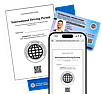

Documents needed
All it takes is what’s already in your wallet
- Valid domestic driver’s license
- Passport-style photo
- Valid government-issued ID
- Completed online application



Your license instantly translated and valid in 189+ countries. Travel freely to multiple destinations with a single permit — use in unlimited countries during validity period.
Recognized for 1 year here. Your IDP stays valid for its full term in 189+ other destinations.
An International Driving Permit is not officially recognized in this country.
Start your application
Takes less than 2 minutes to complete
Recognized for 1 year here. Your IDP stays valid for its full term in 189+ other destinations.
An International Driving Permit is not officially recognized in this country. Please check local driving regulations.

Limited Coverage
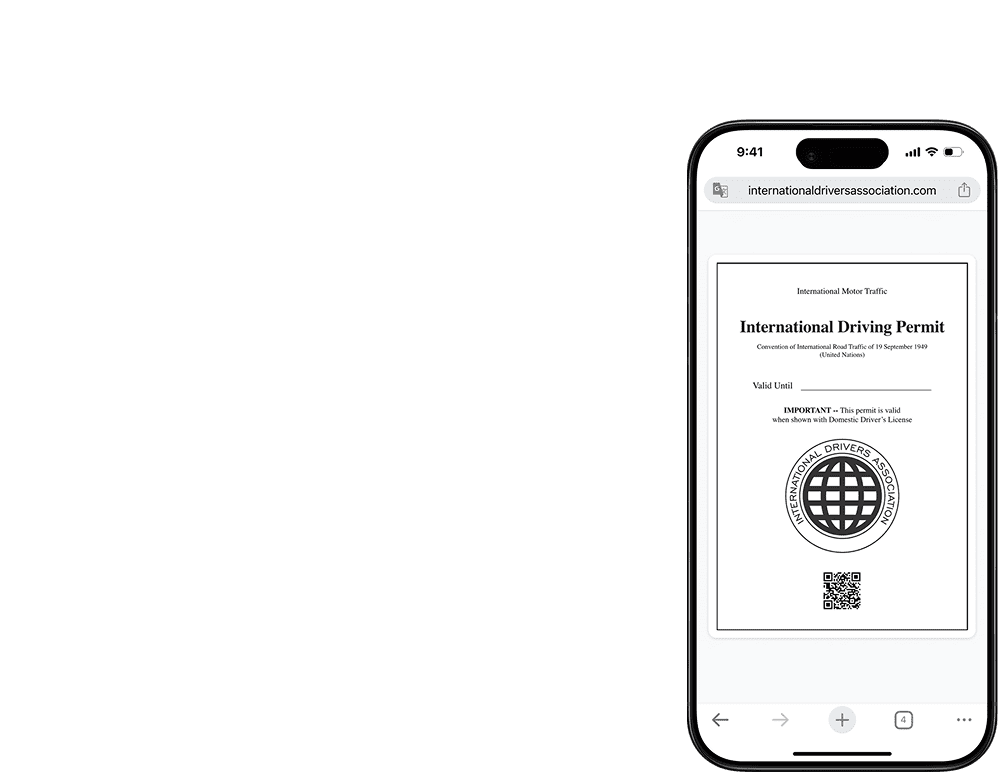
Digital Only | 1-Year Validity
$49
Recommended
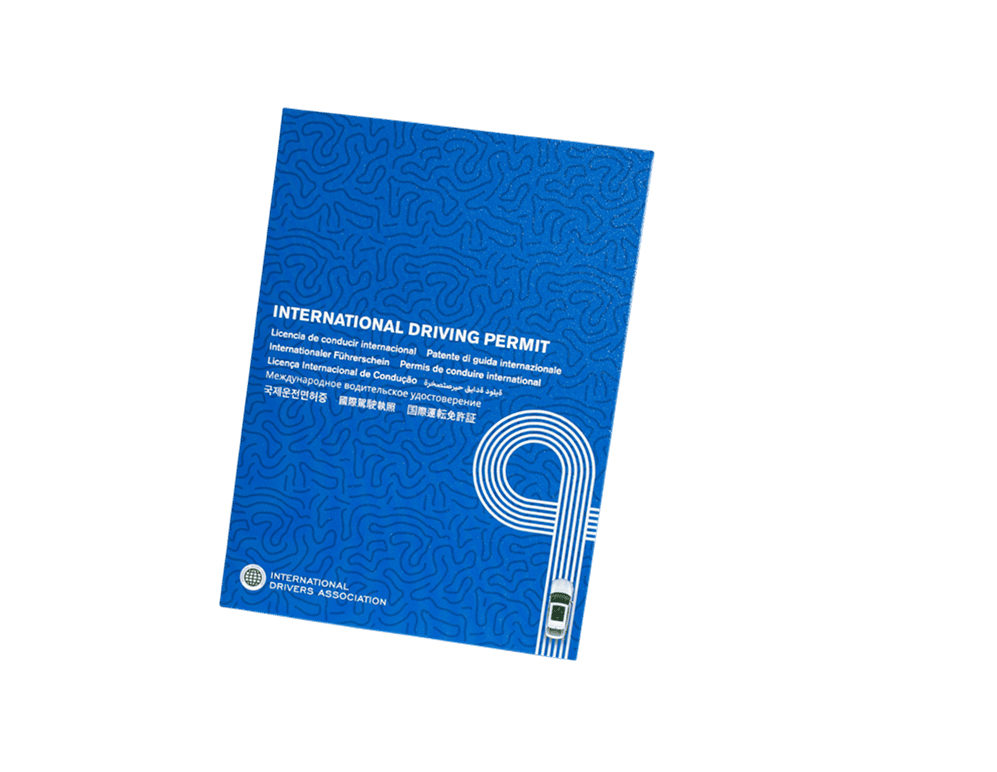
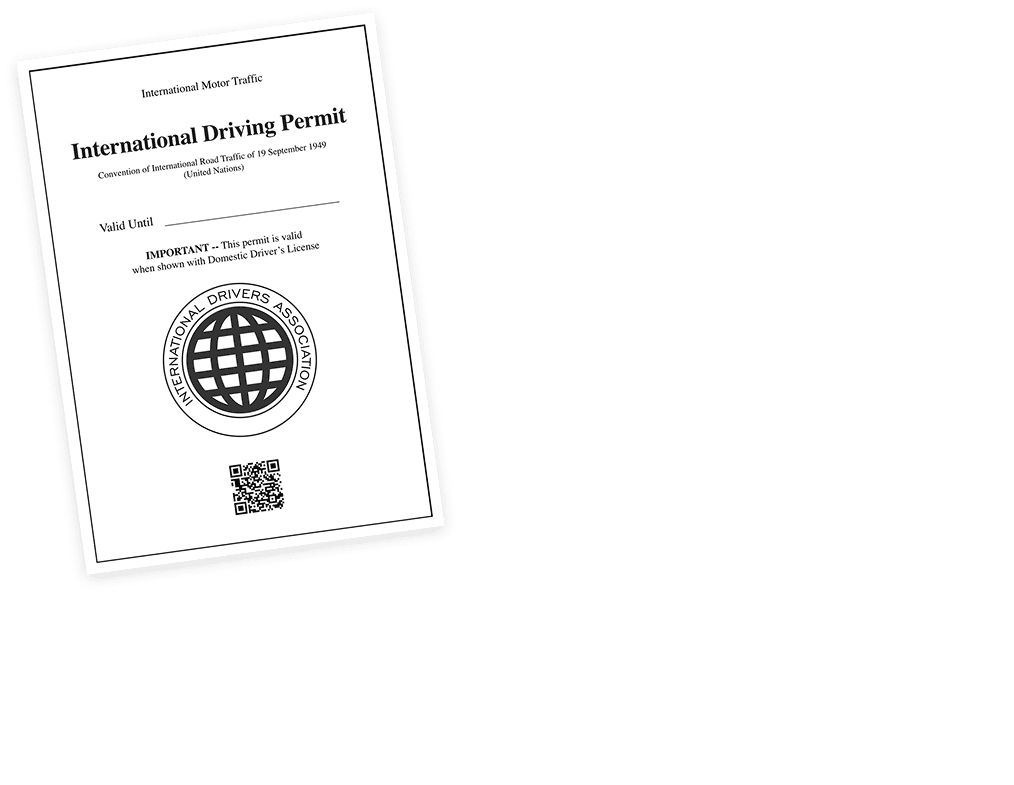
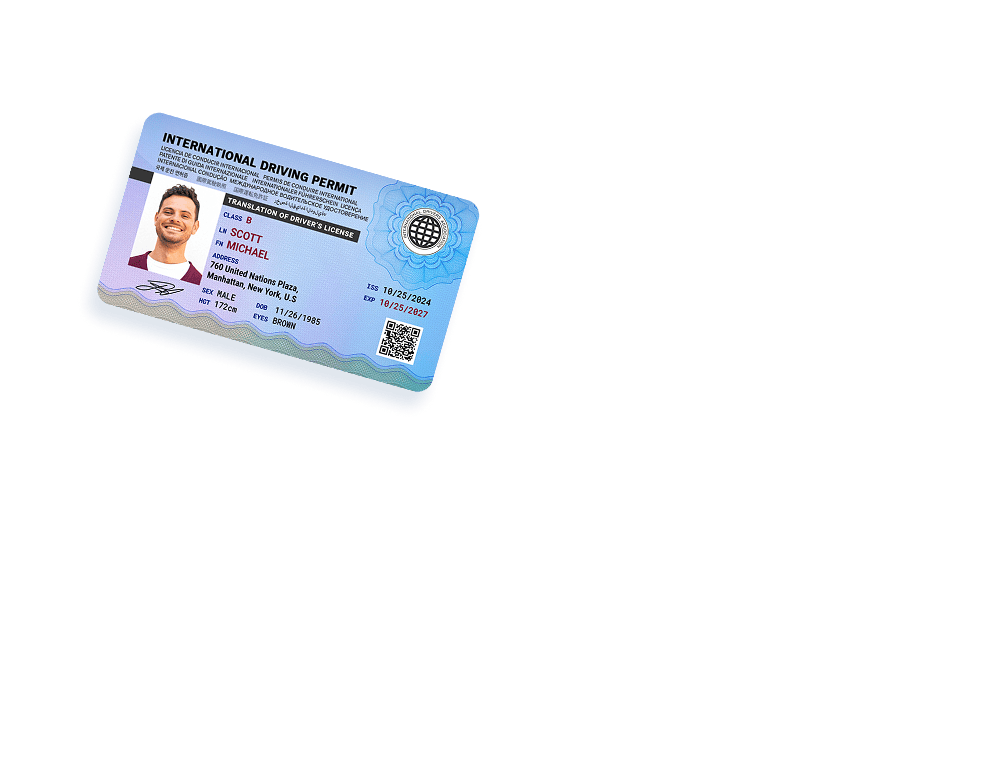
Global Coverage
Print + Digital | 3-Year Validity
$79
$149







Bolivia allows foreign nationals to drive for up to one year from entry with a recognized International Driving Permit alongside their valid domestic license. Issuing authority recognition matters here, confirm yours is accepted before driving.
| Driver type | Requirement | Notes |
|---|---|---|
| Tourist / short-term visitor | Required in most cases | Carry original license at all times |
| Rental car driver | Commonly required | Verify issuing authority with your rental company |
| Long-term foreign resident | Different rules apply | After 1 year, a local license may be needed |
| Mutually recognized license holder | May be exempt | Depends on home country agreement |
Make sure you meet the eligibility requirements and have the following documents ready before you start.
All it takes is what’s already in your wallet
You must meet every condition below
International Driver's Association issues International Driving Permit (IDP) for up to 3 years of validity and is acknowledged by over 150 countries worldwide: Belize, Botswana, Cameroon, Colombia, Chile, Dominican, Gambia, Georgia, Ghana, Guatemala, Honduras, El Salvador, Iceland, Malaysia, Mauritania, Mauritius, Nicaragua, Papua New Guinea, Paraguay, Philippines, Seychelles, South Africa, Spain, Sudan, Tanzania, Thailand, Tunisia, Uganda, Ukraine and many more.
If you are a US citizen, you can use your US driver's license to drive around Bolivia. However, tourists are only allowed to stay in Bolivia for a maximum of 90 days. After 90 days, if you wish to continue driving in Bolivia, update your license to the one issued in the country. Don't drive with expired license.
If you want to stay longer in Bolivia and want to get a Bolivian driver's license, you can do so. You need to submit the requirements and pay the corresponding fee to process your application. In applying for a Bolivian license, you have to be at least 18 years of age; you must have a legal residency and give the exact address because they have to confirm your residence before proceeding to the next process.
They might as well need a certification from a driving school and a medical certificate approved and accredited by the Servicio General de Identificación Personal (SEGIP) and your bank deposit slip from Banco Union. Processing all of these may take you 2-4 days before they can generate your Bolivian license.
Edit ImageOverride AltReplaceRemove
Alt Text
If you plan to drive in Bolivia and avail of car rental packages, you must present the necessary documents. It's crucial to familiarize yourself with Bolivia driving rules, including understanding the road conditions and traffic signs. Driving in Bolivia can be a bit challenging, so knowing the Bolivia driving rules is essential for a smooth and trouble-free journey.
Police checkpoints are frequent in Bolivia. This explains why you should have complete travel documents with you while driving. Authorities in Bolivia might ask you to pull over, especially in a busy city for inspection; essential documents like native driver’s license and international driving permit should be presented.
While it’s true that you should have fun when on a trip, but have fun responsibly. Bolivian authorities will not tolerate drunk drivers. Your body’s blood alcohol content should not be more than 0.05%. There’s a corresponding fine for drunk driving, and you could go to jail. Driving under the influence of alcohol and illegal drugs can also lead to road traffic accidents.
Speed limits are usually printed on traffic signs at the roadside, but it won’t cost you less if you know the roads’ maximum speed limit leading to your destinations. Remember, when you drive on urban roads, your car speed must not be more than 50 kph. Meanwhile, on rural or provincial roads, you can only move at a maximum speed of 70 kph. And 80 kph for open roads.
It might not be common to wear seatbelts while driving in Bolivia. But you have to bear in mind that putting on seat belts will save you from injuries if there are massive collisions while driving. If you are traveling with a toddler, make sure to place your child at the rear seat with a car seat. Car rental companies offer car seat rentals as well.
Road and traffic signs might not be noticeable, especially in Bolivian areas with inadequate road lighting, so make sure to focus on driving and the road traffic signs. Especially if they are not very visible, you can take your time driving carefully. No one is tailing you, so no need to hurry in driving.
If you want to use your mobile phones, use the hands-free system. As much as possible, avoid using your phone while driving. It divides your attention from driving and attending to your phone. The use of mobile phones while driving is prohibited in Bolivia.
Driving with an expired license and without an international driving license as driving requirements is a violation in Bolivia. Even if your native driver’s license has expired, your International Driving Permit (IDP) will not replace your valid driver’s license and will not be valid once authorities ask for it.
From colorful festivals to UNESCO World Heritage Sites, historic cities, various gastronomic experiences, and indigenous people. All of these you can explore in Bolivia. Every destination will offer you different vibes and learnings from this South American country.
There’s no greater way to kick-start your adventure than to witness the magnificent and world’s largest salt flat, when you say “where the sea meets the sky,” it’s Salar de Uyuni. This 4,000 square-mile flat makes its reflection of the sky when it rains, turning it to be the world’s most enormous mirror.
This is one of the most popular destinations in Bolivia. Ready your eyes for some flamingos and llamas during your trip. There’s no best time to visit Salar de Uyuni. It depends on what you want to see there. If you’re going to witness the natural mirror effect, you can visit between December to February. If you plan to see how it looks when it’s dry, you can visit Salar de Uyuni in the last weeks of April.
Mi Teleferico is one of the many destinations in La Paz. La Paz city is considered the third most populous city in Bolivia. Driving here could be a challenge due to car congestion, especially in the metro.
This aerial cable car system was officially opened in 2012 to address the growing demand for transportation in La Paz. While you are riding on it, enjoy the view of the Andes mountains. It is a busy destination since almost everyone in La Paz uses it. However, you would not want to miss the city’s view from the top, with its city lights during the evening.
Go back in time to the dinosaurs in this park in the city of Sucre. It was founded in 1994 when a plant company accidentally stumbled upon these 5,000 tracks of eight different dinosaurs. This is also considered the most extensive collection of dinosaur footprints in the world. You can visit this park at any time of the day, from 9 AM to 5 PM. If you want to get good lighting for your photographs, the best time to visit here is in the afternoon.
The whole city of Sucre is A UNESCO World Heritage Site. This is to protect and preserve its significant historical buildings. The Spanish founded this city between the 1500s and the 16th century. So if you are into colonial architecture, then this city is for you.
Despite being tagged as the death road, this destination has attracted an average of 25,000 tourists a year. This road is about 80 kilometers long, linking La Paz’s city and the Yungas region in Bolivia. It previously catered to tourists and locals from going to La Paz to the Yungas region and vice versa. In 2007, it was closed to trucks and other vehicles because of how narrow the road is prone to accidents.
Yungas Road is not for the faint-hearted. There have already been 18 cyclists who have died on this road since 1998. But this is not the reason for tourists and cycling enthusiasts not to try the thrill this road gives. The best time to visit here is during the winter or Bolivia’s dry season from May to October. The temperature could drop to below zero, so be ready with your winter clothes as well.
Seated in the Andes on the border of Peru and Bolivia, Lake Titicaca is the worlds’ e largest navigable lake. This is also considered the largest lake in South America. In Lake Titicaca lies more than forty-one islands, some of which are densely populated. Explore Islas Uros and meet indigenous people living on floating, handmade reed islands. It is the most visited island for tourists coming to Lake Titicaca.
You might also want to visit Isla del Sol. This is considered the largest island in Lake Titicaca that sits just off the Copacabana Peninsula tip in Bolivia. If you wish to explore more islands in this lake, you can visit other cruise packages once you get here. May to October is the best month to visit Lake Titicaca. Dry weather gives clearer air, blue skies, and backdrop-worthy sunsets.
Experience Amazon in Bolivia. Bolivian Amazon is cheaper when you compare it to the one in Brazil. Since the Amazon stretches to nine different countries, you can enjoy the rare flora and fauna in Bolivia. Indulge your eyes with the variety of living ecosystems in this 5.5 million square kilometers of rainforest. You can travel during the dry season between May and October to best experience the Amazon.
One can reach Madidi National Park through Rurrenabaque town. It’s better to get tour packages here for a safer trip to the national park. Madidi was established in 1995 and stretched to an impressive 18 958 square kilometers and is considered one of the world's biologically diverse regions. As you tour inside the national park, try to see different exotic Amazonian animals including 120, 000 species of insects.
Madidi sits in the upper Amazon river basin, the reason why you can witness Amazonian animals. This national park is home to thousands of bird species. About 1 254 individual species constitute 14% of the 9,000 identified species in the world. Enjoy their colors through your eyes and their chirping through your ears. Best to travel here during the dry season between May to October.
Here lies the Cerro Rico silver mine that produced so much silver that it lured the Spanish back then to visit its city. Once known as the wealthiest city in the Americas, not Cerro Rico is mined for its tin. Tourists can experience mining; it’s like taking guided tours in Cerro Rico through the mountain’s narrow tunnels.
Cerro Rico is in the city of Potosi, which is considered a UNESCO World Heritage Site. It was declared in 1987 for its historical value as an extraordinary example of primary silver mining and the economic change in the 16th century by the flood of Spanish currency. And while you are in Potosi, don’t miss to get a glimpse of Mint Museum.
The Cordillera Real or the Royal Range has more than 600 peaks with a height of above 5000 meters above sea level. This is popular for the adventurous who want to conquer high mountains in the Bolivian Andes. However, through the years, the Royal Range has also been known for fun treks, bikes, and hikes.
The Cordillera Real might be nearer to the equator, but it is quite glaciated since it is close to the Amazon lowlands associated with moist air masses. The best time to hop into an adventure here is from May to September. Remember to hire tour guide packages before climbing as many of the peaks here are technical and require climbing experience.
If you are into archaeology, you should not miss Tiwanaku. Witness before your eyes decorated ceramics, monumental structures, and megalithic blocks. This ruined ancient city is a UNESCO World Heritage Site that sits in Lake Titicaca in Western Bolivia. The ruins of Tiwanaku belonged to the Tiwanaku people that occupied the place about 11,000 - 17,000 years ago. It is advised that you visit this place around April - June and September - October.
Edit ImageOverride AltReplaceRemove
Alt Text
If you plan to drive in Bolivia and avail of car rental packages, you must present the necessary documents. It's crucial to familiarize yourself with Bolivia driving rules, including understanding the road conditions and traffic signs. Driving in Bolivia can be a bit challenging, so knowing the Bolivia driving rules is essential for a smooth and trouble-free journey.
Police checkpoints are frequent in Bolivia. This explains why you should have complete travel documents with you while driving. Authorities in Bolivia might ask you to pull over, especially in a busy city for inspection; essential documents like native driver’s license and international driving permit should be presented.
While it’s true that you should have fun when on a trip, but have fun responsibly. Bolivian authorities will not tolerate drunk drivers. Your body’s blood alcohol content should not be more than 0.05%. There’s a corresponding fine for drunk driving, and you could go to jail. Driving under the influence of alcohol and illegal drugs can also lead to road traffic accidents.
Speed limits are usually printed on traffic signs at the roadside, but it won’t cost you less if you know the roads’ maximum speed limit leading to your destinations. Remember, when you drive on urban roads, your car speed must not be more than 50 kph. Meanwhile, on rural or provincial roads, you can only move at a maximum speed of 70 kph. And 80 kph for open roads.
It might not be common to wear seatbelts while driving in Bolivia. But you have to bear in mind that putting on seat belts will save you from injuries if there are massive collisions while driving. If you are traveling with a toddler, make sure to place your child at the rear seat with a car seat. Car rental companies offer car seat rentals as well.
Road and traffic signs might not be noticeable, especially in Bolivian areas with inadequate road lighting, so make sure to focus on driving and the road traffic signs. Especially if they are not very visible, you can take your time driving carefully. No one is tailing you, so no need to hurry in driving.
If you want to use your mobile phones, use the hands-free system. As much as possible, avoid using your phone while driving. It divides your attention from driving and attending to your phone. The use of mobile phones while driving is prohibited in Bolivia.
Driving with an expired license and without an international driving license as driving requirements is a violation in Bolivia. Even if your native driver’s license has expired, your International Driving Permit (IDP) will not replace your valid driver’s license and will not be valid once authorities ask for it.
From colorful festivals to UNESCO World Heritage Sites, historic cities, various gastronomic experiences, and indigenous people. All of these you can explore in Bolivia. Every destination will offer you different vibes and learnings from this South American country.
There’s no greater way to kick-start your adventure than to witness the magnificent and world’s largest salt flat, when you say “where the sea meets the sky,” it’s Salar de Uyuni. This 4,000 square-mile flat makes its reflection of the sky when it rains, turning it to be the world’s most enormous mirror.
This is one of the most popular destinations in Bolivia. Ready your eyes for some flamingos and llamas during your trip. There’s no best time to visit Salar de Uyuni. It depends on what you want to see there. If you’re going to witness the natural mirror effect, you can visit between December to February. If you plan to see how it looks when it’s dry, you can visit Salar de Uyuni in the last weeks of April.
Mi Teleferico is one of the many destinations in La Paz. La Paz city is considered the third most populous city in Bolivia. Driving here could be a challenge due to car congestion, especially in the metro.
This aerial cable car system was officially opened in 2012 to address the growing demand for transportation in La Paz. While you are riding on it, enjoy the view of the Andes mountains. It is a busy destination since almost everyone in La Paz uses it. However, you would not want to miss the city’s view from the top, with its city lights during the evening.
Go back in time to the dinosaurs in this park in the city of Sucre. It was founded in 1994 when a plant company accidentally stumbled upon these 5,000 tracks of eight different dinosaurs. This is also considered the most extensive collection of dinosaur footprints in the world. You can visit this park at any time of the day, from 9 AM to 5 PM. If you want to get good lighting for your photographs, the best time to visit here is in the afternoon.
The whole city of Sucre is A UNESCO World Heritage Site. This is to protect and preserve its significant historical buildings. The Spanish founded this city between the 1500s and the 16th century. So if you are into colonial architecture, then this city is for you.
Despite being tagged as the death road, this destination has attracted an average of 25,000 tourists a year. This road is about 80 kilometers long, linking La Paz’s city and the Yungas region in Bolivia. It previously catered to tourists and locals from going to La Paz to the Yungas region and vice versa. In 2007, it was closed to trucks and other vehicles because of how narrow the road is prone to accidents.
Yungas Road is not for the faint-hearted. There have already been 18 cyclists who have died on this road since 1998. But this is not the reason for tourists and cycling enthusiasts not to try the thrill this road gives. The best time to visit here is during the winter or Bolivia’s dry season from May to October. The temperature could drop to below zero, so be ready with your winter clothes as well.
Seated in the Andes on the border of Peru and Bolivia, Lake Titicaca is the worlds’ e largest navigable lake. This is also considered the largest lake in South America. In Lake Titicaca lies more than forty-one islands, some of which are densely populated. Explore Islas Uros and meet indigenous people living on floating, handmade reed islands. It is the most visited island for tourists coming to Lake Titicaca.
You might also want to visit Isla del Sol. This is considered the largest island in Lake Titicaca that sits just off the Copacabana Peninsula tip in Bolivia. If you wish to explore more islands in this lake, you can visit other cruise packages once you get here. May to October is the best month to visit Lake Titicaca. Dry weather gives clearer air, blue skies, and backdrop-worthy sunsets.
Experience Amazon in Bolivia. Bolivian Amazon is cheaper when you compare it to the one in Brazil. Since the Amazon stretches to nine different countries, you can enjoy the rare flora and fauna in Bolivia. Indulge your eyes with the variety of living ecosystems in this 5.5 million square kilometers of rainforest. You can travel during the dry season between May and October to best experience the Amazon.
One can reach Madidi National Park through Rurrenabaque town. It’s better to get tour packages here for a safer trip to the national park. Madidi was established in 1995 and stretched to an impressive 18 958 square kilometers and is considered one of the world's biologically diverse regions. As you tour inside the national park, try to see different exotic Amazonian animals including 120, 000 species of insects.
Madidi sits in the upper Amazon river basin, the reason why you can witness Amazonian animals. This national park is home to thousands of bird species. About 1 254 individual species constitute 14% of the 9,000 identified species in the world. Enjoy their colors through your eyes and their chirping through your ears. Best to travel here during the dry season between May to October.
Here lies the Cerro Rico silver mine that produced so much silver that it lured the Spanish back then to visit its city. Once known as the wealthiest city in the Americas, not Cerro Rico is mined for its tin. Tourists can experience mining; it’s like taking guided tours in Cerro Rico through the mountain’s narrow tunnels.
Cerro Rico is in the city of Potosi, which is considered a UNESCO World Heritage Site. It was declared in 1987 for its historical value as an extraordinary example of primary silver mining and the economic change in the 16th century by the flood of Spanish currency. And while you are in Potosi, don’t miss to get a glimpse of Mint Museum.
The Cordillera Real or the Royal Range has more than 600 peaks with a height of above 5000 meters above sea level. This is popular for the adventurous who want to conquer high mountains in the Bolivian Andes. However, through the years, the Royal Range has also been known for fun treks, bikes, and hikes.
The Cordillera Real might be nearer to the equator, but it is quite glaciated since it is close to the Amazon lowlands associated with moist air masses. The best time to hop into an adventure here is from May to September. Remember to hire tour guide packages before climbing as many of the peaks here are technical and require climbing experience.
If you are into archaeology, you should not miss Tiwanaku. Witness before your eyes decorated ceramics, monumental structures, and megalithic blocks. This ruined ancient city is a UNESCO World Heritage Site that sits in Lake Titicaca in Western Bolivia. The ruins of Tiwanaku belonged to the Tiwanaku people that occupied the place about 11,000 - 17,000 years ago. It is advised that you visit this place around April - June and September - October.
Join thousands of satisfied travelers who trust us for their international driving permits
Full refund if not accepted anywhere, plus unlimited free replacements.
Best Value
Maximum coverage – includes everything you might need abroad

Instant Peace of Mind – Ready for Download in Minutes
Find answers to common queries and get the information you need quickly and easily.
An International Driving Permit is a requirement to drive or rent a car in most foreign countries.