

Documentos necesarios
Solo necesitas lo que ya llevas en tu cartera
- Licencia de conducir nacional válida
- Foto tipo pasaporte
- Identificación oficial válida emitida por el gobierno
- Solicitud en línea completada



Tu licencia traducida al instante y válida en más de 189 países. Viaja libremente a varios destinos con un solo permiso: úsalo en países ilimitados durante el periodo de validez.
Reconocido por 1 año aquí. Tu IDP permanece válido durante todo su período de vigencia en más de 189 destinos.
El Permiso Internacional de Conducir no está oficialmente reconocido en este país.
Comienza tu solicitud
Toma menos de 2 minutos completarlo
Reconocido por 1 año aquí. Tu IDP permanece válido durante todo su período de vigencia en más de 189 destinos.
El Permiso Internacional de Conducir no está oficialmente reconocido en este país. Por favor, consulte las regulaciones locales de conducción.

Cobertura limitada
Solo digital | Validez de 1 año
$49
Recomendado
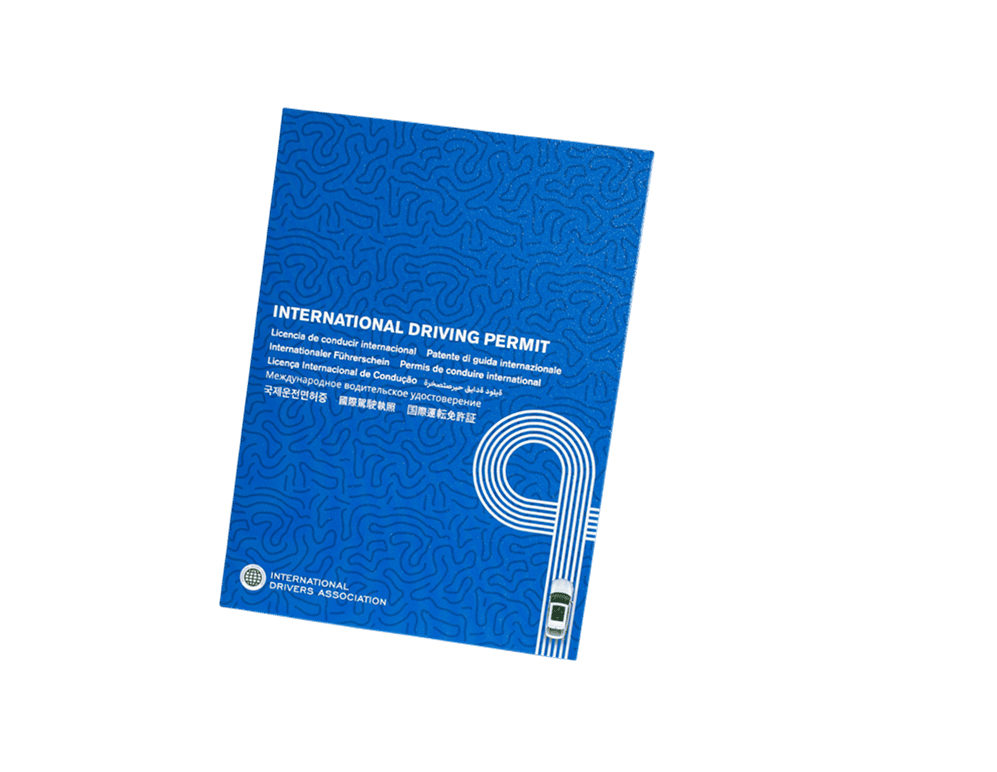
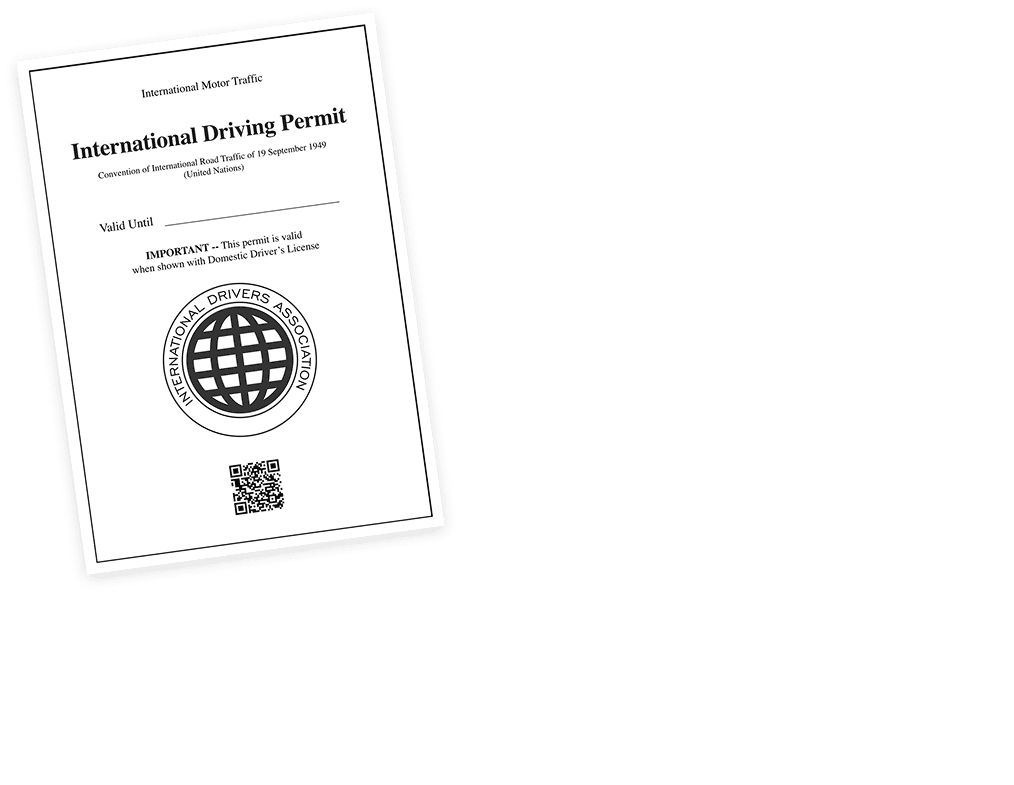
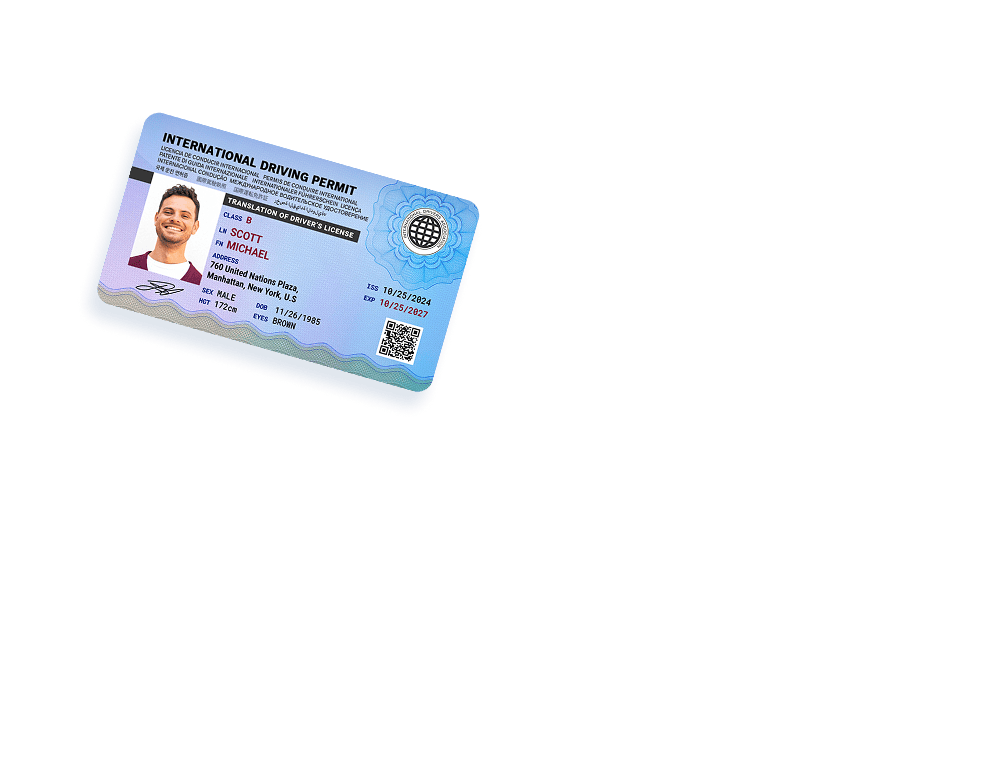
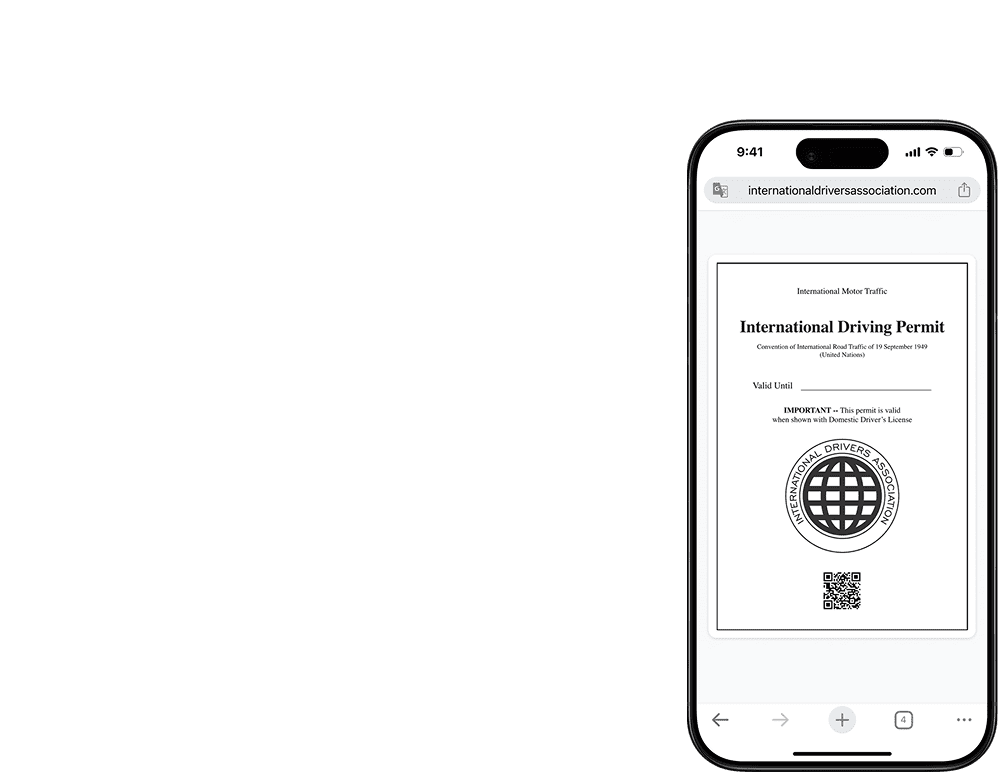
Cobertura global
Impreso + digital | Validez de 3 años
$79
$149







Benín permite a ciudadanos extranjeros conducir hasta un año desde su entrada con un Permiso Internacional de Conducción reconocido junto con su licencia nacional válida. El reconocimiento de la autoridad emisora es importante aquí, confirme que la suya es aceptada antes de conducir.
| Tipo de conductor | Requisito | Notas |
|---|---|---|
| Turista / visitante de corta duración | Requerido en la mayoría de los casos | Lleve su licencia original en todo momento |
| Conductor de automóvil de alquiler | Comúnmente requerido | Verifique la autoridad emisora con su empresa de alquiler |
| Residente extranjero de larga duración | Se aplican reglas diferentes | Después de 1 año, puede ser necesaria una licencia local |
| Titular de licencia reconocida mutuamente | Puede estar exento | Depende del acuerdo con el país de origen |
Asegúrese de cumplir con los requisitos de elegibilidad y tenga los siguientes documentos listos antes de comenzar.
Solo necesitas lo que ya llevas en tu cartera
Debes cumplir todas las condiciones siguientes
Yes if you are coming from foreign country you will need international driver's license (IDL) in order to drive a motor vehicle or rent a car. You have the option to apply for one before traveling or apply for your International Driving License in the airport upon arrival. The International Driving License requirements only include a valid native driving license and for you to have reached the age of 18.
Fill in information on the International Driving Permit (IDP) application form. You will have to submit a valid copy of the front and back of your driving license for verification. You will also need to upload a passport style photo and your signature. Pay the permit fee through credit card and other payment options. Once your payment for the application has been accepted, we will process the application!
Our permit is recognized in 150+ countries. Some of them are Australia, Armenia, Bahrain, Bangladesh, Belarus, Belgium, Brazil, Canada, Congo, Cote d'ivoire, Cyprus, Egypt, Estonia, Georgia, Germany, Ghana, Indonesia, Iran, Ireland, Japan, Jordan, Kenya, Korea, Kuwait, Laos, Macao, Moldova, Myanmar, Namibia, Nepal, Netherlands, Panama, Pakistan, Portugal, Philippines, Qatar, Romania, Saudi Arabia, South Africa, Sierra Leone, Sri Lanka, Spain, Sudan, Switzerland, Ukraine, Uruguay, Taiwan, Vietnam.
Getting to various destinations in Benin is not difficult because the majority of the terrain is nearly flat, with an exception to the Atakora Mountain Range in the northwest. However, before you embark on a road trip, it's crucial to familiarize yourself with Benin driving rules. You'll need to maintain proper road etiquette and observe these driving rules even outside urban areas where road traffic is minimal to none. Understanding and following the Benin driving rules ensures a safe and enjoyable journey across this beautiful country.
Drive On the Right Side of the Road
There are no proper road markings even within the urban area. This includes lane boundaries and pedestrian walkways. If you’re driving across this country, especially in a road section with no proper delineation, always remember to keep right. This is because the Beninese drive on the right side of the road.
If you come from a country that drives on the left side of the road, you may want to practice driving first with a professional driving instructor before you drive out alone. You wouldn’t want to get confused especially when you’ll come across an intersection or turn in sharp road curves.
Drive Within the Speed Limit
When driving within urban areas, you need to maintain a speed of 50 km/hr. When you go driving outside city perimeters, you can, however, speed up but only up to a maximum of 90 km/hour. Road traffic police are deployed around, and they do not play around. If you are caught over speeding, you will be liable for a fine or risk having your International Driver’s License and driver's license suspended. Contrary to what some people say, avoid bribing land transportation authorities at all costs. This will just place you in a more dreadful situation.
Do not drink and drive
Drinking and driving at the same time is not well tolerated. You should strictly follow this road traffic rule to avoid penalties from the land transportation authorities. You’re only allowed a maximum of 50 mg of alcohol per 100ml of blood while driving. Again, if you get caught beyond the allowable alcohol limit, you may face a certain fine, be imprisoned or risk having your driver's license confiscated. So before you over-indulge in that delicious Sodabi (popular Beninese drink), make sure you don’t forget that you still need to drive home.
Nestled between Togo, Nigeria, Burkina Faso and Niger, this Sub-Saharan country in West Africa features a dynamic tourism industry highly rooted in the country’s rich indigenous culture. The official language is French, while Fon is the most widely spoken national language. If you’re planning on exploring West Africa soon, here are some very interesting destinations that you can check out.
Founded in 1645, the city of Abomey was once the mighty capital of Benin (pre-colonially called the Kingdom of Dahomey). Monarchs ruled the Kingdom then, and with this came their extravagant palaces with walls that were thought to be higher than the surrounding village structures.
At present, structural ruins of these palaces are still preserved in Abomey. If you want to learn about the pre-colonial culture, this city of Abomey is your place. Two (2) of the most famous palace complexes have been converted to the Historic Museum of Abomey, and it’s a museum that you surely don’t want to miss.
If you are game for a safari adventure, it would be difficult not to find yourself in Tanguieta. This area is the most popular jump-off point toward Parc National de la Pendjari where you can see the most interesting animals in their natural habitat. This includes Hippopotamus and the African Forest Elephant to name a few.
In addition, Tanguieta is located on the foothills of the Atakora Mountains. If you don’t want to go on a tour of the safari, you can still go sightseeing within the town because the Atakora Mountains have the most scenic cliffs.
Have you ever noticed that indigenous African villages have a lot of interesting residential structures? When you head out to the town of Natitingou, you will come across what is officially called a “Tata”. This is a type of house built with multiple levels, supported by fortress-high walls. One can call this a mini castle. The Tata is a cultural trademark of the Somba people, so when you’ll be in the area, you can also learn about an umbrella culture.
What can be exciting about Natitingou is that you can actually spend the night in one of the Tatas! Yes, you can sleep under the stars if you wish to on the rooftops of these Tatas. In the morning right then, you can ask the locals to teach you how to make Shea Butter the traditional way.
Lake Nokoue is found along the southern marshlands. It is a popular area for watching, and it is home to what is known as the “Venice of Africa” — the village of Ganvie. Ganvie is likened to Venice because the houses and all other community structures stand on stilts, and the only way to go around the village is to ride a boat (motorized or non-motorized).
However, Lake Nokoue is thought to be on the verge of collapsing because of the degree of pollution. This is why if you’re interested to volunteer for environmental causes, you can find a lot of programs for Lake Nokoue. During your downtimes (day-offs), you can bike around the lake or try fishing with the locals.
Learn about another prominent tribe — the Baribas. The town of Nikki is home to these expert horsemen, and it is one of many areas that is not busy with tourists. If you do not know how to ride a horse, you might find a Bariban that can teach you the proper and safe way to do so. Nikki is located about 529 km northeast of Cotonou. It will take you about eight (8) hours to reach the area, but a drive that’s going to be as scenic as the natural landscapes of the Atakora.
If you didn’t know it yet, this country is the motherland of the Vodun religion, also known as Voodoo. In the center of it all lies the town of Ouidah, a town that’s less than 40 km west of Cotonou. In Ouidah, you can find the Temple of Pythons and the biggest Voodoo Market in the country.
Apart from that, Ouidah also holds some of the most notable stories in the history. It is here that you can find the slave route (Route des Esclaves), since Ouidah also took part in slave-trading hugely (second to Abomey). Other sights to see in Ouidah is the Door of No Return and the Sacred Forest of Kpasse, both being historically important for the people of Ouidah.
This country is not all semi-arid Sub-Saharan areas. Its 120 km down south is characterized by soft-sand beaches, perfect for a day out in the sun. Grand Popo is the westernmost section of this stretch of shore. You can do all sorts of beach activities in the area without worrying about food and drinks since stalls are scattered everywhere. In the nearby communities, you can go on a stroll and learn about how to make sea salt the traditional way.
The highest peak is Mount Koussou-Kovangou, and it is located in the district of Boukoumbe. Boukoumbe features a busy community with a marketplace that’s perfect for some exotic shopping. You can also find the famous Tata houses in Boukoumbe and find one where you can stay in. From a quick light bulb idea, do you think you’d be able to identify the different styles of Tata houses? That would be an exciting thing to do!
Boukoumbe shares the border with Togo, and it is about a long 9-hour drive from Cotonou. The fastest route is via RNIE2 and RNEI3 which will take you towards the northwestern side.
Cotonou is the administrative capital. This is not to be mistaken as the official capital which is Porto-Novo. However, Cotonou is the center of urban development. This is where the international airport is located, and it is where commerce and trade are bustling. Cotonou is also where you’ll find a lot of educational institutions, restaurants, hotels, and other tourist hubs.
When you’re in Cotonou, make sure to visit the Dantokpa Market, the L’étoile Rouge Monument, and the Notre Dame des Apotres Cathedral Likewise, check out some souvenirs to bring home at the Artisanal Center.
This city is the official capital, and it is home to numerous museums, all housing precious artifacts about the history. However, Porto-Novo is not all just that, the city also features plenty of restaurants that offer the most delicious treats. You can check out Chez Mahi and Java Promo for some energy meals before continuing your tour.
Bab’s Dock is probably one of the best-kept secrets (well, not anymore after this). To get to this enchanting retreat, you’ll have to ride a canoe up a river lined by lush mangrove forests. Bab’s Dock is located within a marshland near Cotonou, nestled on the banks of a lake where you can go sailing, chill on the wooden terrace, take a swim, eat and dine and just lounge around with the surrounding mother nature at its best.
Bab’s Dock is a tranquil retreat from the bustling city of Cotonou. You just need to call the management first to book your visit. They will be the ones to pick you up from Cotonou and take you to the area.
Also found in Cotonou, Fidjrosse Beach is just right beside the Cardinal Bernadin Gantin de Cotonou Airport. It is a very busy area bustling with tourists, both local and foreign alike. Just like Grand Popo Beach, Fidjrosse Beach has a wide soft-sand beach that caters to almost all beach activities. Swimming is allowed but discouraged in the area because of strong currents.
The area is also teeming with hotels and restaurants, so you should expect quite festive vibes when you visit. Drop by Fidjrosse Beach and you may chance upon live musical acts playing on the beach.
Únete a miles de viajeros satisfechos que confían en nosotros para sus permisos internacionales de conducción
Reembolso completo si tu permiso no es aceptado, además de reposiciones gratuitas e ilimitadas.
Mejor relación calidad-precio
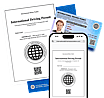
Cobertura máxima: incluye todo lo que puedes necesitar en el extranjero

Tranquilidad al instante: listo para descargar en minutos
Encuentra respuestas a las preguntas más comunes y obtén la información que necesitas de forma rápida y sencilla.
Un Permiso Internacional de Conducción es un requisito para conducir o alquilar un automóvil en la mayoría de los países extranjeros.