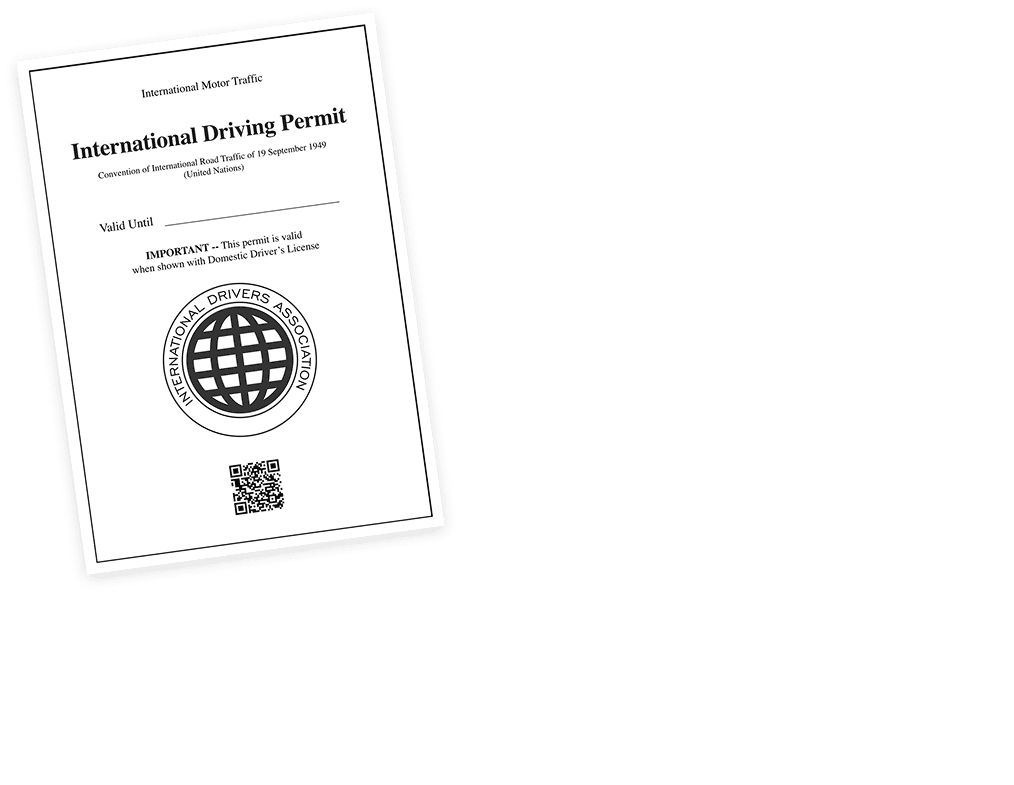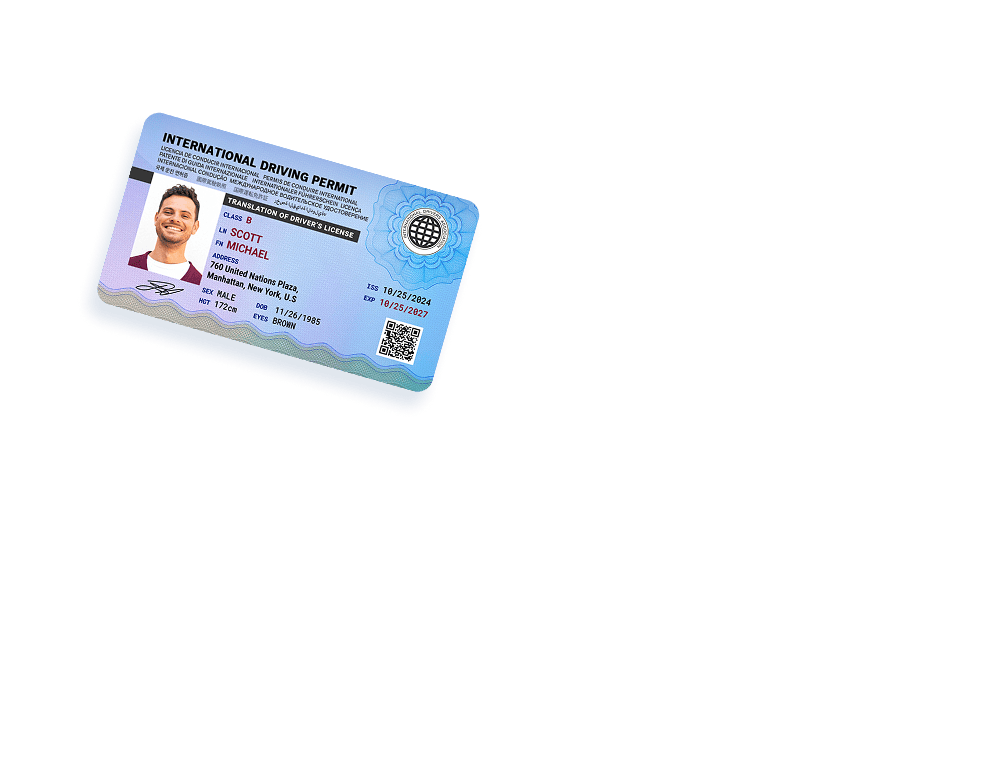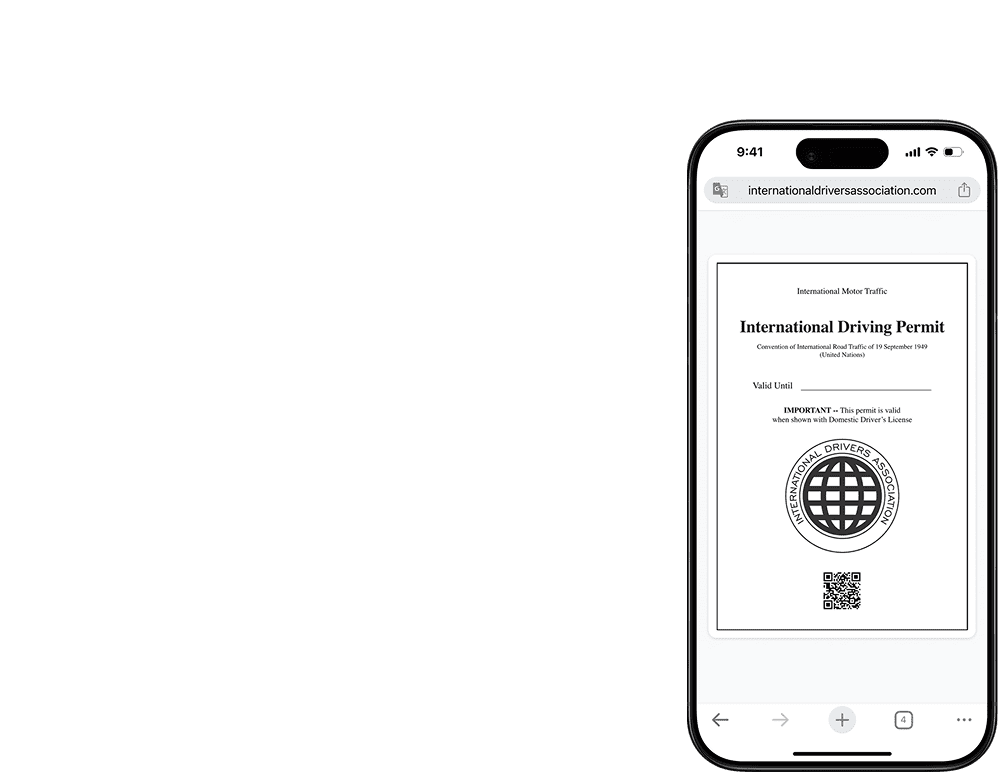
Documentos necessários
Basta o que já tem na carteira
- Carteira de motorista nacional válida
- Foto estilo passaporte
- Documento de identidade válido emitido pelo governo
- Pedido online preenchido
Sua carteira traduzida instantaneamente e válida em mais de 150 países. Viaje livremente para diversos destinos com uma única permissão — use em quantos países quiser durante o período de validade.
A Permissão Internacional para Conduzir não é oficialmente reconhecida neste país.
Inicie sua solicitação
Leva menos de 2 minutos para concluir
A Permissão Internacional para Conduzir não é oficialmente reconhecida neste país. Por favor, verifique as regulamentações locais de condução.

Cobertura limitada
Apenas digital | Validade de 1 ano
$49
Recomendado
Cobertura global
Impresso + Digital | Validade de 3 anos
$79
$149

Áustria permite que cidadãos estrangeiros conduzam durante até um ano após a entrada com uma Permissão Internacional para Conduzir reconhecida, juntamente com a sua carta de condução nacional válida. O reconhecimento da autoridade emissora é importante aqui — confirme que a sua é aceite antes de conduzir.
| Tipo de condutor | Requisito | Notas |
|---|---|---|
| Turista / visitante de curta duração | Obrigatória na maioria dos casos | Transporte sempre a carta original |
| Condutor de carro alugado | Frequentemente obrigatória | Verifique a autoridade emissora junto da sua empresa de aluguer |
| Residente estrangeiro de longa duração | Aplicam-se regras diferentes | Após 1 ano, pode ser necessária uma carta de condução local |
| Titular de carta de condução mutuamente reconhecida | Pode estar isento | Depende do acordo com o país de origem |
Certifique-se de que cumpre os requisitos de elegibilidade e tenha os seguintes documentos preparados antes de começar.
Basta o que já tem na carteira
Deve cumprir todas as condições abaixo
To visit and explore Austria, you must have an International Driving Permit. It is required to drive there legally unless you are from an EU country.
Aside from obtaining an International driver’s license, you must also follow the road and Austria driving rules and regulations to avoid possible troubles along your trip. There may be some road signs that might be unfamiliar to you, so you have to be careful while driving.
An International Driving Permit (IDP) is required. Checkpoints on Austrian roads are unpredictable.
If you are a European Union (EU) citizen, you do not need to obtain an international driving license in Austria. Austrian authorities do acknowledge driving licenses from EU citizens.
Besides your International Drivers License, remember to bring your local driver's license, passport, and other important documents. Austrian authorities might question you, and they might look for the documents mentioned.
Drinking and driving is illegal in most countries, including Austria, as it causes severe accidents. In Austria, the maximum blood alcohol level for driving is 0.05%. New drivers with less than two years of experience have a lower limit of 0.01%. Exceeding these limits can result in fines and possible license denial.
Every road has a speed limit. Authorities are strict about speeding since it contributes to severe accidents. Violating speed limits in Austria can result in fines starting from €30 and possible license denial.
Road signs serve a crucial purpose – guiding and assisting drivers during their trips. Strict adherence to these signs is essential. Austrians are known for their disciplined driving, and it's equally important to play your part by diligently obeying road signs. This not only contributes to overall road safety but also helps prevent accidents.
Using your phone while driving diverts your attention from the road, posing a significant danger. If your phone has a hands-free system, it can be used for navigation. If you must attend to your phone, pull over gradually, activate your hazard lights, and then use your phone.
It is never okay to run a red light. No matter how impatient you are or how you really want to cross the road, do not run a red light. It can lead to severe accidents, not just to you but also to other drivers on the road. Violating this would get you fined starting from €70.
In Austria, seatbelt compliance is strictly enforced. Failure to wear a seatbelt can result in hefty fines or even license suspension. All occupants, including passengers in the backseat, must wear seatbelts while the vehicle is in motion.
Austria, with 46 million visitors in 2019, is known for skiing, après-ski, hospitality, and off-slope activities. Its castles, palaces, and architectural works also attract tourists. A brilliant destination for outdoor enthusiasts, Austria offers diverse sights and activities. Here are the best places to visit in Austria.
Dating back to the 1600s and playing a significant cultural role in Austria, the Schonbrunn Palace is a massive complex with 1441 rooms, standing as the primary tourist draw in Vienna. The palace, constructed in the Baroque style, is an expansive structure characterized by its symmetrical design, featuring a multitude of windows and statues embellishing the rooftop.
St. Stephen's Cathedral stands out as a culturally significant landmark in Vienna, serving as the city's primary Roman Catholic church. It holds a prominent place among Austria's top attractions. The cathedral's 137-meter-high spire and intricately adorned roof make it a key Gothic structure in the city, encapsulating eight centuries of architectural history.
The amazing Spanish Riding School was established after Emperor Maximilian II introduced the famous Lipizzaner horses to his courtesans in 1562. It is now one of the leading riding schools in the world. It thrills the audience with its fabulous displays of equestrian skills. This is one of the best things to do in Austria, as you can watch world-class performances by the riders and these stunning white horses.
The majority of the permanent art collections and exhibitions at the Belvedere are housed in the Upper Belvedere Palace. This palace consists of two magnificent Baroque structures: the Lower (Unteres) and Upper (Oberes) Belvedere.
Noteworthy features of the Upper Palace include the Ground Floor Hall, adorned with statues, and the Ceremonial Staircase, distinguished by its elaborate stucco relief and frescoes.
It is a must to visit Hofburg when you explore Austria. It was originally a fortified castle that dates back to the 13th century. Inside, the Imperial Silver Collection, Sisi Museum, and the Imperial Apartments told a wealth of rich culture and history to explore.
If you love heights, you should not miss Vienna's skyline landmark. The Wiener Reisenrad is one of the earliest Ferris wheels ever built. The nearly 65 m (212 ft) tall Ferris wheel opened in 1897 in celebration of the Golden Jubilee of Emperor Franz Josef I. Enjoy the breathtaking and stunning views over Vienna's UNESCO-listed historic center.
Exploring Austria without experiencing skiing diminishes the excitement of the visit. Austria is renowned globally as a premier destination for reliable snow conditions and skiing. The well-known resort town of Kitzbühel offers enthusiasts 170 kilometers of skiable pistes, featuring charming mountain huts along its slopes. This skiing destination is highly sought after and ranks among the top skiing resorts in Austria.
Are you ready to embark on your Austrian adventure? With your International Driving Permit, you're set to traverse the scenic landscapes and immerse yourself in the nation's rich history. Whether strolling around the stunning Schönbrunn Palace, riding on the Wiener Riesenrad, or challenging yourself with a ski trip in Kitzbühel, Austria offers something for everyone.
Don't wait; explore our International Driving License Packages and start planning your Austrian escapade. Safe journey!
To visit and explore Austria, you must have an International Driving Permit. It is required to drive there legally unless you are from an EU country.
Aside from obtaining an International driver’s license, you must also follow the road and Austria driving rules and regulations to avoid possible troubles along your trip. There may be some road signs that might be unfamiliar to you, so you have to be careful while driving.
An International Driving Permit (IDP) is required. Checkpoints on Austrian roads are unpredictable.
If you are a European Union (EU) citizen, you do not need to obtain an international driving license in Austria. Austrian authorities do acknowledge driving licenses from EU citizens.
Besides your International Drivers License, remember to bring your local driver's license, passport, and other important documents. Austrian authorities might question you, and they might look for the documents mentioned.
Drinking and driving is illegal in most countries, including Austria, as it causes severe accidents. In Austria, the maximum blood alcohol level for driving is 0.05%. New drivers with less than two years of experience have a lower limit of 0.01%. Exceeding these limits can result in fines and possible license denial.
Every road has a speed limit. Authorities are strict about speeding since it contributes to severe accidents. Violating speed limits in Austria can result in fines starting from €30 and possible license denial.
Road signs serve a crucial purpose – guiding and assisting drivers during their trips. Strict adherence to these signs is essential. Austrians are known for their disciplined driving, and it's equally important to play your part by diligently obeying road signs. This not only contributes to overall road safety but also helps prevent accidents.
Using your phone while driving diverts your attention from the road, posing a significant danger. If your phone has a hands-free system, it can be used for navigation. If you must attend to your phone, pull over gradually, activate your hazard lights, and then use your phone.
It is never okay to run a red light. No matter how impatient you are or how you really want to cross the road, do not run a red light. It can lead to severe accidents, not just to you but also to other drivers on the road. Violating this would get you fined starting from €70.
In Austria, seatbelt compliance is strictly enforced. Failure to wear a seatbelt can result in hefty fines or even license suspension. All occupants, including passengers in the backseat, must wear seatbelts while the vehicle is in motion.
Austria, with 46 million visitors in 2019, is known for skiing, après-ski, hospitality, and off-slope activities. Its castles, palaces, and architectural works also attract tourists. A brilliant destination for outdoor enthusiasts, Austria offers diverse sights and activities. Here are the best places to visit in Austria.
Dating back to the 1600s and playing a significant cultural role in Austria, the Schonbrunn Palace is a massive complex with 1441 rooms, standing as the primary tourist draw in Vienna. The palace, constructed in the Baroque style, is an expansive structure characterized by its symmetrical design, featuring a multitude of windows and statues embellishing the rooftop.
St. Stephen's Cathedral stands out as a culturally significant landmark in Vienna, serving as the city's primary Roman Catholic church. It holds a prominent place among Austria's top attractions. The cathedral's 137-meter-high spire and intricately adorned roof make it a key Gothic structure in the city, encapsulating eight centuries of architectural history.
The amazing Spanish Riding School was established after Emperor Maximilian II introduced the famous Lipizzaner horses to his courtesans in 1562. It is now one of the leading riding schools in the world. It thrills the audience with its fabulous displays of equestrian skills. This is one of the best things to do in Austria, as you can watch world-class performances by the riders and these stunning white horses.
The majority of the permanent art collections and exhibitions at the Belvedere are housed in the Upper Belvedere Palace. This palace consists of two magnificent Baroque structures: the Lower (Unteres) and Upper (Oberes) Belvedere.
Noteworthy features of the Upper Palace include the Ground Floor Hall, adorned with statues, and the Ceremonial Staircase, distinguished by its elaborate stucco relief and frescoes.
It is a must to visit Hofburg when you explore Austria. It was originally a fortified castle that dates back to the 13th century. Inside, the Imperial Silver Collection, Sisi Museum, and the Imperial Apartments told a wealth of rich culture and history to explore.
If you love heights, you should not miss Vienna's skyline landmark. The Wiener Reisenrad is one of the earliest Ferris wheels ever built. The nearly 65 m (212 ft) tall Ferris wheel opened in 1897 in celebration of the Golden Jubilee of Emperor Franz Josef I. Enjoy the breathtaking and stunning views over Vienna's UNESCO-listed historic center.
Exploring Austria without experiencing skiing diminishes the excitement of the visit. Austria is renowned globally as a premier destination for reliable snow conditions and skiing. The well-known resort town of Kitzbühel offers enthusiasts 170 kilometers of skiable pistes, featuring charming mountain huts along its slopes. This skiing destination is highly sought after and ranks among the top skiing resorts in Austria.
Are you ready to embark on your Austrian adventure? With your International Driving Permit, you're set to traverse the scenic landscapes and immerse yourself in the nation's rich history. Whether strolling around the stunning Schönbrunn Palace, riding on the Wiener Riesenrad, or challenging yourself with a ski trip in Kitzbühel, Austria offers something for everyone.
Don't wait; explore our International Driving License Packages and start planning your Austrian escapade. Safe journey!
Junte-se a milhares de viajantes satisfeitos que confiam em nós para as suas licenças de condução internacionais
Reembolso completo se não for aceito em nenhum lugar, além de substituições gratuitas ilimitadas.
Melhor valor

Máxima cobertura – inclui tudo o que você pode precisar no exterior
Tranquilidade Instantânea – Pronto para download em minutos
Encontre respostas para dúvidas comuns e obtenha rapidamente as informações de que precisa.
Yes, an International Driving License is required in Austria. Always bring your International Driving Permit (IDP) when driving. Get your International Drivers Permit through our website. No driving test is needed in foreign countries. International Driving Permit (IDP) is valid for 3 years. Rental companies often require an International Driving Permit (IDP) for foreign drivers, regardless of their European country of origin. However, if you're from an EEA country, you might not need it, simplifying the car rental process.
Yes, you must be at least 18 years old to apply for an International Driving Permit in Austria. Additionally, you must already possess a valid Austrian driver's license. The International Driver's License serves as a supplementary document to your national license and is valid for one year from the date of issue.
Yes, the International Driver's license issued in Austria is generally recognized worldwide. It serves as a translation of your Austrian driver's license and allows you to drive in many countries that honor the International Driving Permit. However, it's essential to check the specific requirements of the country you plan to visit, as not all countries have the same regulations regarding international driver's licenses.
Yes, an Indian driving license is valid in Austria for up to 12 months from the entry date, provided it is in English or accompanied by a certified translation. However, if you establish residence in Austria, the license is only valid for 6 months from residency. Carrying an International Driving Permit (IDP) for translation is advisable.
Driving in Austria is generally safe for Indian tourists, thanks to the country's well-maintained roads, efficient public transport, and strict adherence to traffic regulations. Austrian drivers are typically courteous, and the road signage is clear and easy to understand, which can help ease navigation for those unfamiliar with the area.
Uma Permissão Internacional para Conduzir é um requisito para conduzir ou alugar um carro na maioria dos países estrangeiros.